
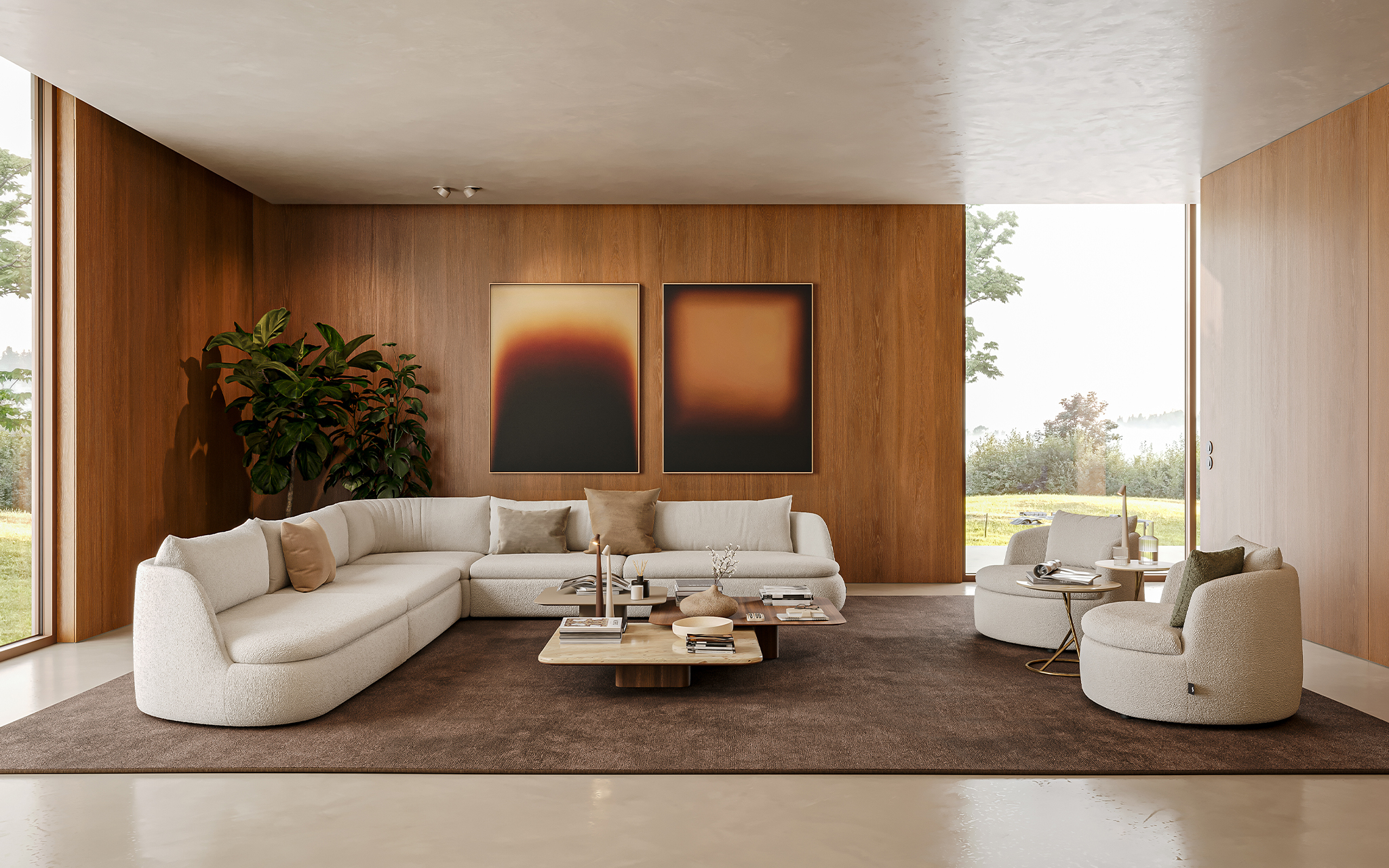
It is common to associate timelessness with a certain aesthetic language. For years, it was believed that a neutral, minimalist or contemporary interior would, by itself, have a greater ability to withstand the test of time. But just look at projects designed in different decades to realise that the reality is more complex.
There are deeply minimalist spaces that today seem dated. Others, designed many years ago, remain current without ever having sought to follow a particular trend. The difference is rarely in the style. It lies in the quality of the decisions.
A space continues to make sense when every choice responds to the place, the architecture and the way it will be lived in. Timelessness does not arise from the absence of trends, but from the ability to create environments that remain relevant when those trends cease to exist.
But what does it actually mean to make decisions capable of standing the test of time?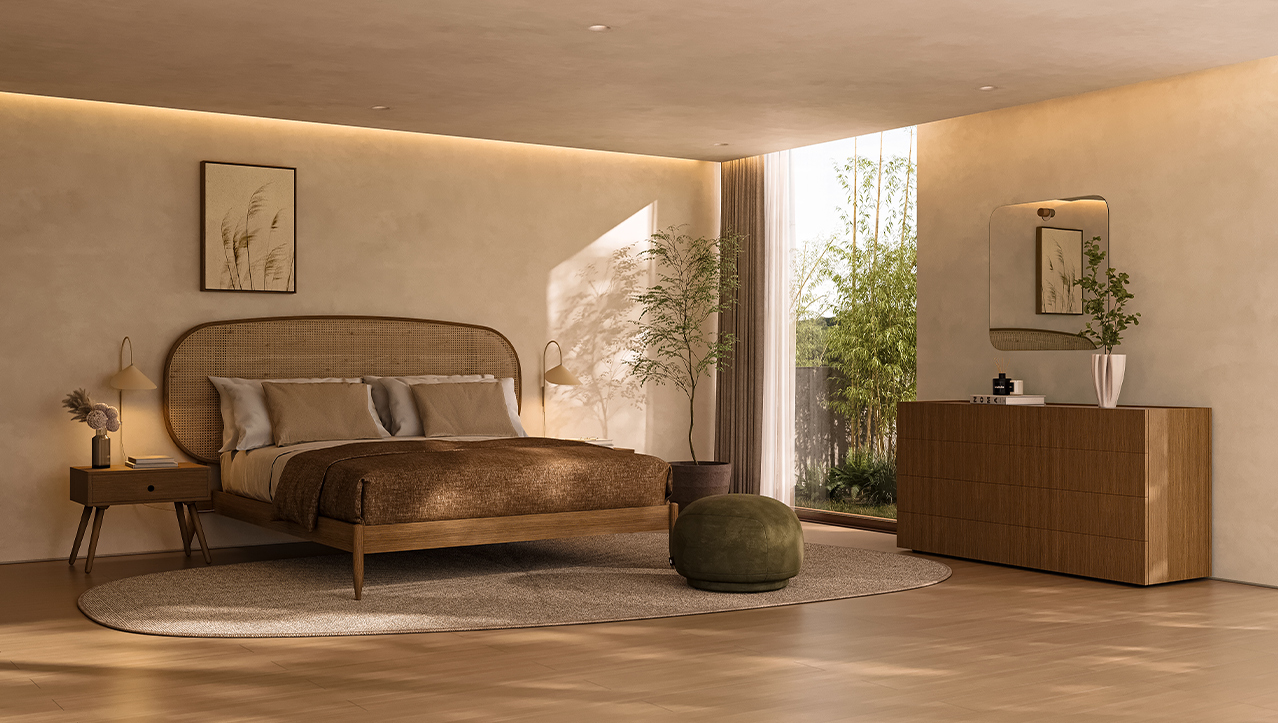
Koshi Bed | Seacoast Bedside Table | Adam Pouf | Antony 7 Chest of Drawers | Arum Wall Lamp | Dedali Vase
Beyond the first glance
When we observe a space for the first time, it is natural for the eye to be drawn to the shapes. We notice the silhouette of a chair, the size of a table or the geometry of a lamp. It is an immediate reaction. But the quality of an interior rarely reveals itself at that first moment.
As we remain in the space, we begin to notice aspects that initially went unnoticed. The way light travels across a surface throughout the day. The balance between different volumes. The relationship between materials which, when seen in isolation, might seem insignificant, but together create a coherent atmosphere.
It is in this transition from first impression to experience that a space truly begins to reveal itself. Materials cease to be merely an aesthetic choice. They start to influence how light is reflected, how the environment gains depth and how each piece integrates into the whole. Proportions stop being a matter of size and begin to determine the sense of balance. The eye stops seeking protagonists and starts to perceive relationships.
A wood can take on a completely different expression depending on the light it receives. A straw headboard can alter the perception of a piece without changing its design. These are discreet decisions, but deeply structuring. They do not seek to capture attention; they seek to build an environment capable of continuing to make sense long after the initial impact has faded.
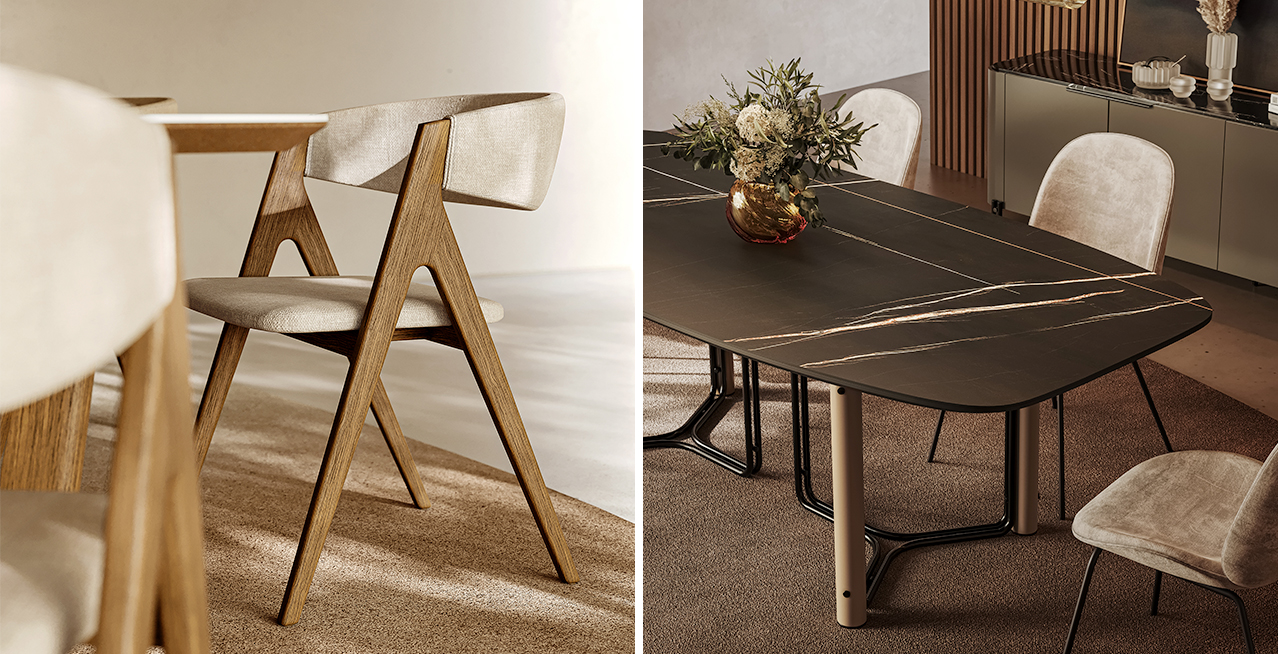
Fredd Chair | Medina Dining Table | Verona Chair | Water Swirl Round Vase
An environment is not (just) the sum of its pieces
There is a natural tendency to evaluate an interior through the objects that compose it. It is natural to ask which table was chosen, who designed the chair or where that sofa comes from. It is an intuitive way to observe a space, but it hardly explains why some environments remain current for so many years.
A piece can be extraordinary and yet lose strength when placed in the wrong context. Likewise, an apparently discreet object can gain an unexpected presence when it becomes part of a carefully thought-out whole.
It is this relationship that transforms a selection of pieces into a truly coherent space. The proportions, the repetition of certain materials, the contrast between surfaces, the way the eye moves through the space or the presence of natural light create a continuity that hardly depends on a single element. Perhaps that is why the most striking interiors are also those where it is hardest to identify a protagonist.
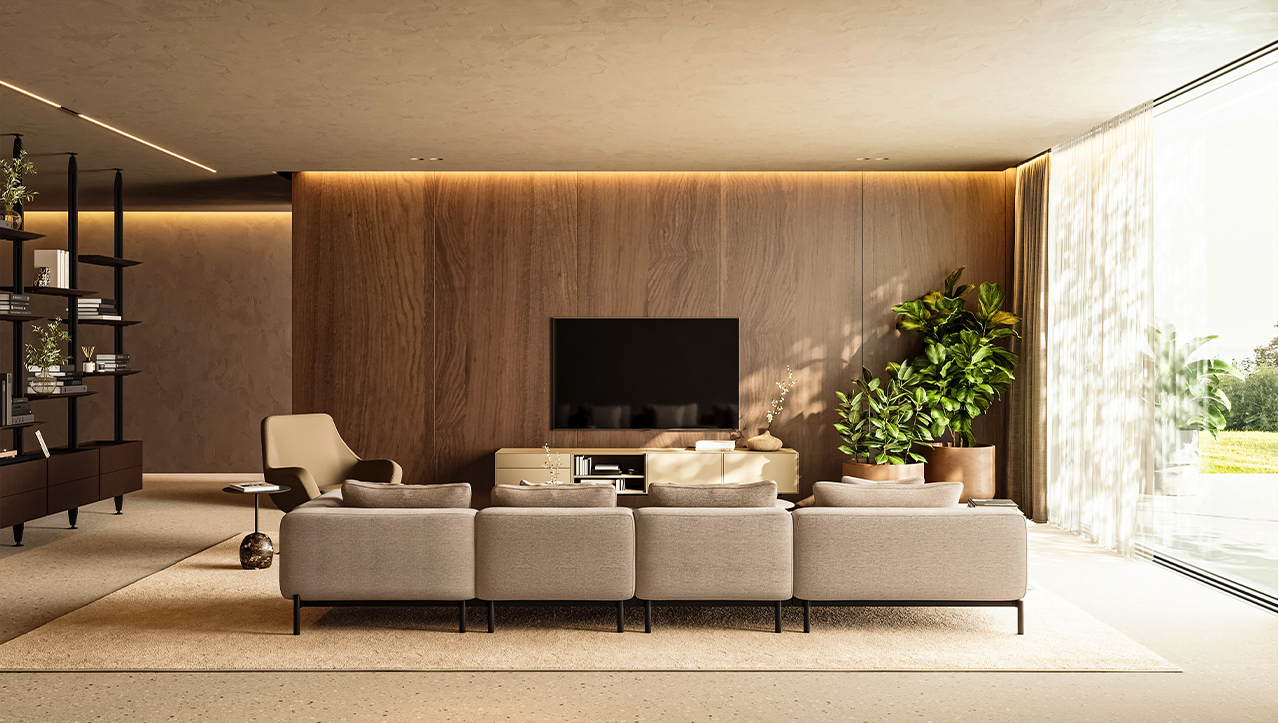
Daniels Sofa | Lato Side Table | Noomi Armchair | Antony Modular Shelf
Time is also part of it
Observing a space at different times of the day is enough to understand how light changes the way we experience it. Morning light highlights certain textures. In the late afternoon, materials gain depth. At night, artificial lighting again alters the atmosphere. The space is the same, but the experience is completely different.
And over the years, the same happens. Surfaces acquire character. Some materials age naturally. Others quickly lose the ability to dialogue with the space.
That is why timelessness never depends solely on the appearance of a piece. It also depends on how that piece continues to live within an environment. When a material was chosen only because it responded to a trend, time tends to expose it. When it was chosen for the relationship it establishes with the architecture, with the light and with the other elements of the space, that choice continues to make sense long after the trend disappears. Ultimately, this is what distinguishes an interior that ages from an interior that matures.
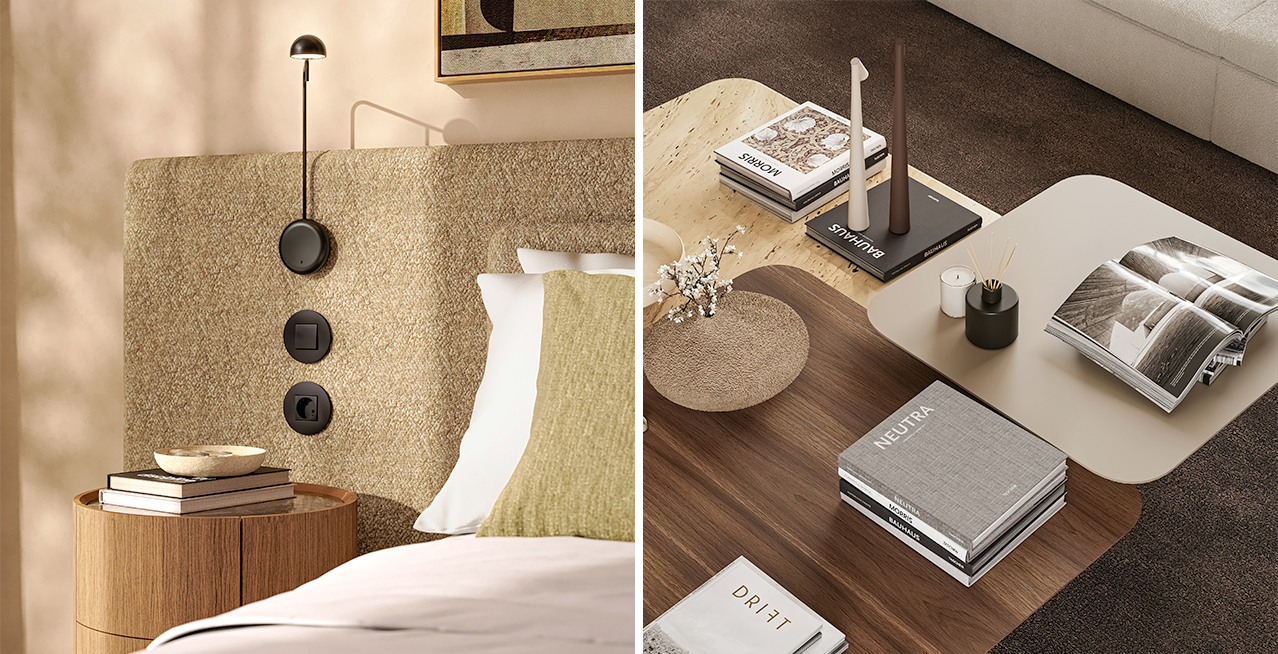
Tróia Modular Bed | Round 1 Bedside Table | Pin Wall Lamp | Shitake Coffee Tables | Africa Table Lamp
Timeless is a consequence of good decisions
The word "timeless" is frequently used in interior design. However, it is not always accompanied by a reflection on what it really means.
Designing to last does not imply eliminating personality, avoiding contrasts or creating environments that are excessively neutral. It means understanding that a space will be lived in for many years and that this living will inevitably be part of the project.
No home remains exactly the same. Books will change places. New objects will be added. Some pieces will remain, others will be replaced. The home will accompany those who inhabit it and gain new layers of meaning. When fundamental decisions are well made, all these changes happen without compromising the identity of the space.
Perhaps this is the best definition of timelessness.
Not creating interiors that resist time, but rather creating spaces that continue to make sense as life happens within them.
Visit Tralhão Design Center or explore our online inspirations to discover environments where materials, proportions and design come together to create spaces designed to last. If you are looking for support to develop an interior design project, our team is available to assist you at every stage. Contact us on 239 506 400 or by email at